
There is a big difference between having a business and building a business.
A business can tick along quite happily for a long time. Clients come in, work gets done, invoices go out, staff get paid, and from the outside everything looks fine. The problem is that if all your time is spent servicing what already exists, then you are not really deciding where the business goes next. You are simply hoping that enough work keeps appearing to keep things moving.
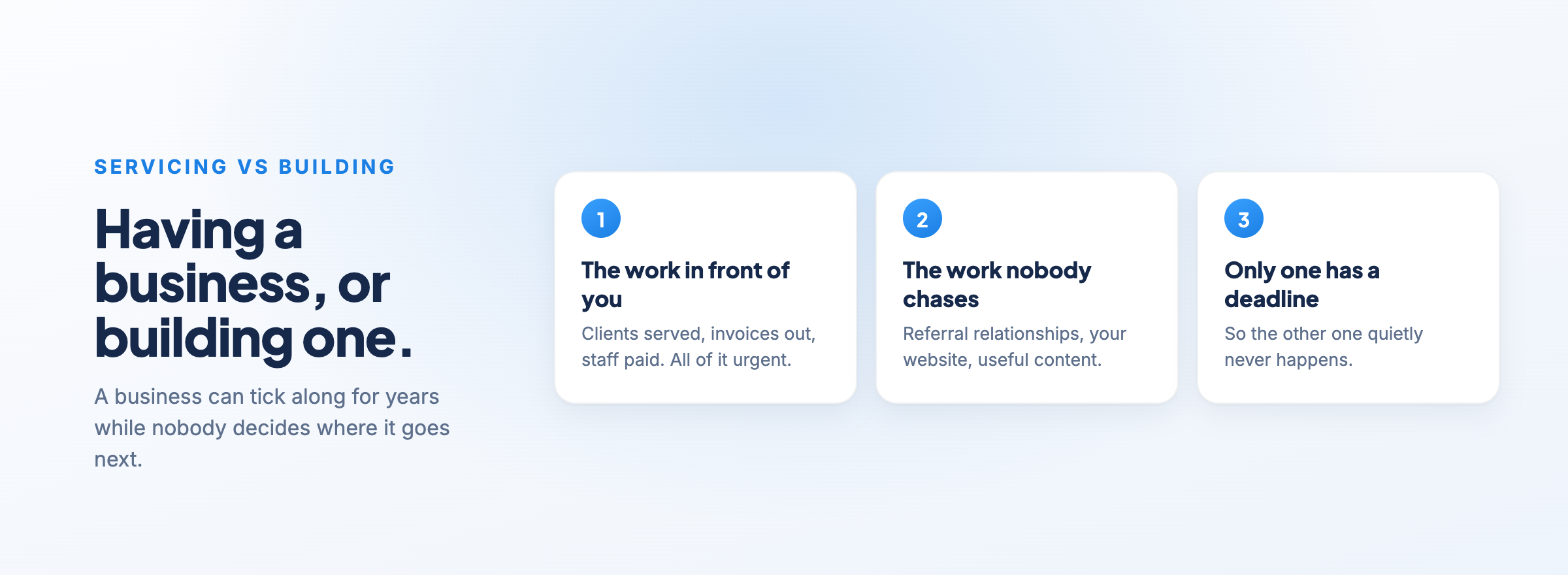
That is why I think every business owner or director should deliberately set aside time each week for marketing. Not when things get quiet. Not when you happen to have a free afternoon. It needs to be booked into your week in the same way you would book a client meeting, a staff meeting or any other task that matters.
At a bare minimum, I would suggest two one-hour blocks every week that are used specifically for building the future of the business.
Personally, I tend to spend more than that. I will often block out two lots of three hours because I want to grow fairly quickly, but the exact amount of time is not really the point. The point is that the time exists and that it is protected. If you want slower, steadier growth, two hours a week can still make a significant difference over the course of a year.
Marketing is one of those things where the work you do today often pays off much later. I think of it a bit like planting seeds. You can plant time, you can plant money, and quite often you need to plant a bit of both. What you are hoping to harvest later is a stronger referral network, more enquiries, better opportunities and ultimately more clients.
If you never plant anything, you cannot be surprised when there is nothing there to harvest six months down the track.
Marketing Is Not The Same Thing As Advertising
One of the reasons people avoid marketing is that they have a very narrow idea of what it is. They hear the word marketing and immediately think about Google Ads, Facebook Ads, flyers, SEO, social media and a long list of things they now feel guilty for not doing.
That is not how I look at it.
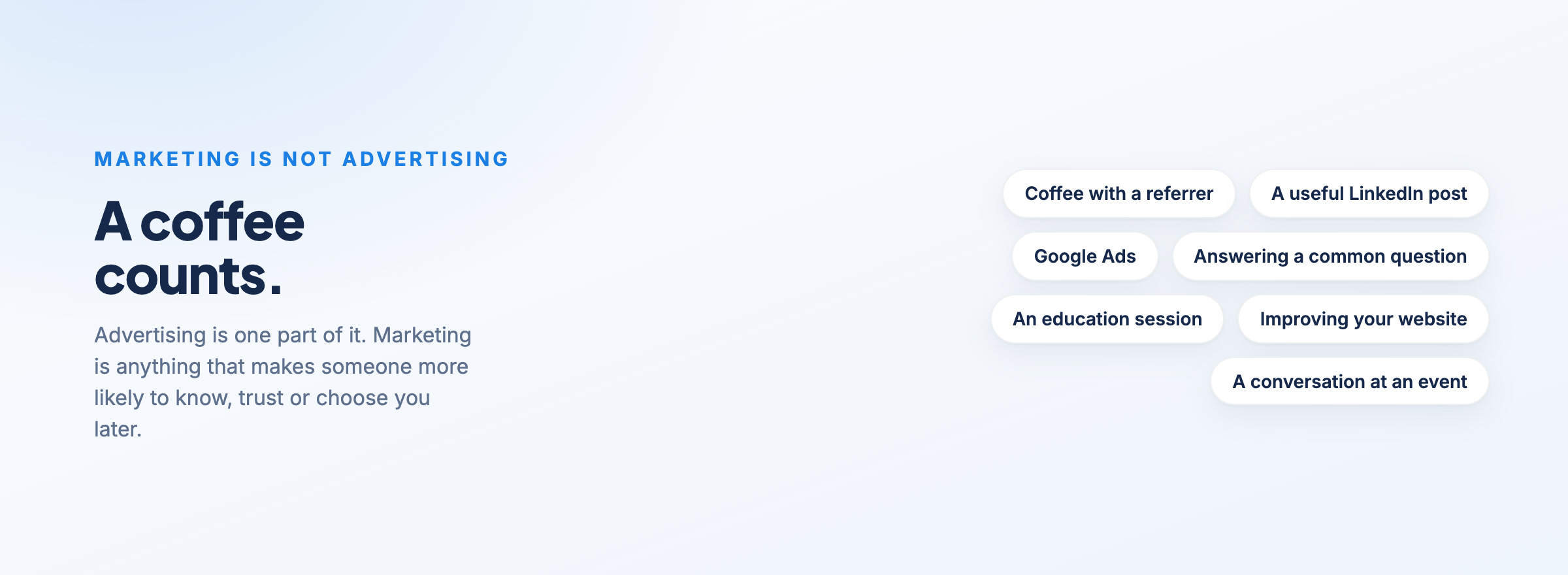
Advertising is part of marketing, but marketing is much broader. Marketing is the work you do now that increases the likelihood that someone will know, trust, recommend or choose your business later.
Sometimes one of the best pieces of marketing you can do this week is have a coffee with the right person.
I do not mean another vague networking coffee where you talk about what you both do, swap details and then never speak again. I mean sitting down with someone who deals with the type of people your business can genuinely help and having a useful conversation. What problems are they seeing? What are they struggling to find? Where are the gaps? Does your service actually solve something they need solved?
Sometimes the answer will be yes and sometimes it will be no, but either way you have learnt something useful and built a real relationship. That absolutely counts as marketing.
Build Relationships Before You Need The Work
A large amount of my own work comes through LinkedIn. It is not because I spend all day pitching people or sending cold messages. Most of the value comes from simply being there consistently, sharing things I know, having conversations and trying to be useful.
Someone might read something I post today and have absolutely no need for my services. That is fine. Six months later, they might see something else. A year later, they might suddenly have the exact problem I can help with. At that point, I am not a stranger.
There is no reason an NDIS or allied health business cannot do the same thing. You know things that other people in your sector need to know. You deal with situations that support coordinators, providers, participants, families and other professionals are trying to understand. Sharing some of that knowledge can be a very effective way to stay visible and useful without constantly trying to sell something.
Pick Marketing You Will Actually Keep Doing
There are plenty of ways I could market my business that I would hate doing. I do not enjoy knocking on doors. I do not enjoy cold calling. I do not want to spend hours trying to force myself to do something I know I will avoid next week.
I do enjoy talking to people. I enjoy LinkedIn. I enjoy sharing useful ideas and having conversations with people in the sector, so naturally those things have become a large part of how I market.
Business owners sometimes think the right marketing strategy must be the one that makes them most uncomfortable. It does not.
If you are good face to face, spend more time building referral relationships. If you are comfortable on video, make videos. If you are good at explaining things, write useful articles or improve the information on your website. If you enjoy running small education sessions or presentations, use that.
You Do Not Need To Do Ten Things At Once
I regularly speak to business owners who think their marketing problem is that they are not doing enough channels. They will tell me they need SEO, Facebook, Google Ads, a new website, Instagram, email marketing, video and probably three other things they heard about that week.
Usually my advice is to slow down.
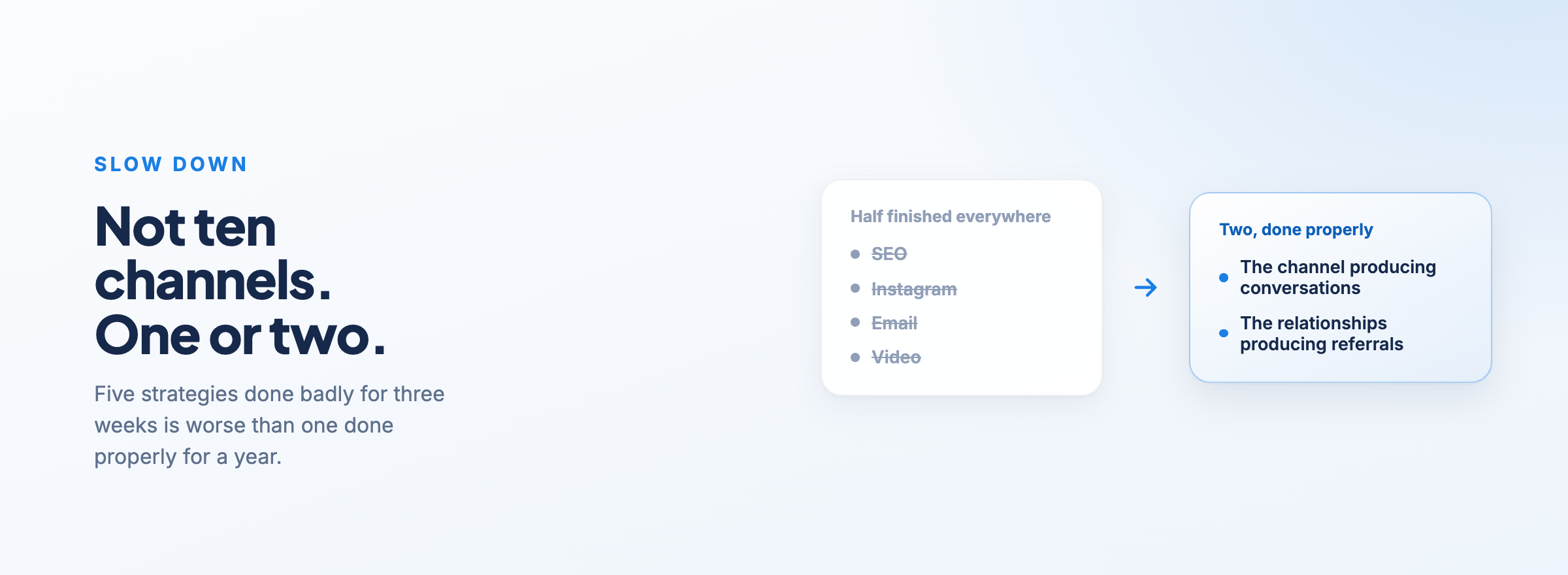
Marketing is not about doing ten things. It is about finding one or two things that work and putting enough time into them to do them properly.
If LinkedIn is producing conversations and referrals, keep building that. If your best work comes through professional relationships, invest in those relationships. If Google is bringing in the right enquiries, improve what you are doing there before adding another five platforms.
You also need to be careful not to confuse activity with progress. It is very easy to spend hours making graphics, editing pages, posting for the sake of posting or tweaking things that do not really matter. You can feel extremely busy without doing anything that is likely to produce a client, a referral or a useful relationship.
What Do You Do With The Time Software Gives Back?
A good piece of software is not only valuable because it makes an individual task faster. The bigger question is what you do with the time it gives back.
Astalty is a good example. I have seen clients reclaim a significant amount of time by removing repetitive administration, particularly around things like invoicing and the back-and-forth that comes with managing those processes manually.
If a business owner gets three or four hours back every week, they now have a choice. They can fill those hours with more small tasks, more email and more general busyness, or they can put some of that time into activities that actually grow the business.
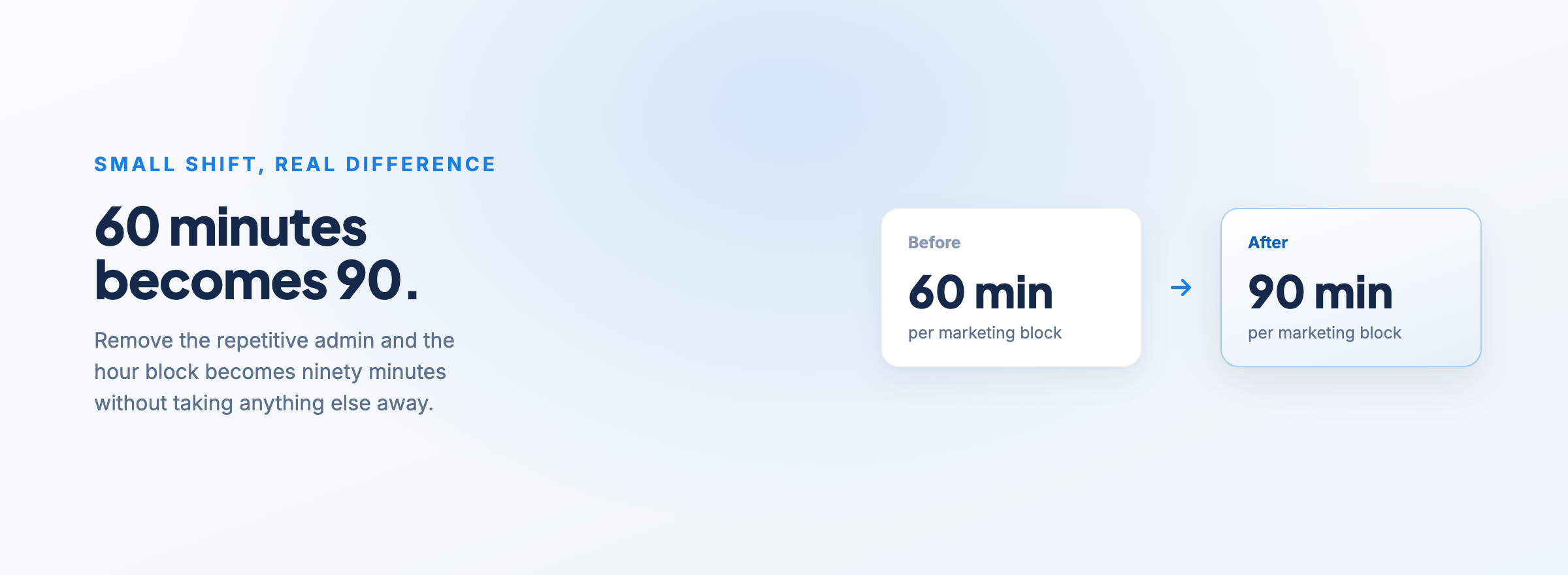
If someone was previously managing to spend two hours a week on marketing and a better system gives them another three hours back, perhaps those one-hour marketing blocks become 90-minute blocks.
That might not sound dramatic, but another hour every week is more than 50 hours across a year. Imagine what 50 deliberate hours spent building referral relationships, improving your website, speaking to potential partners, sharing useful information or following up with the right people could do for a business.
Being Busy Is Not The Same As Building A Business
Most of the business owners I work with are not lazy. Usually the opposite is true. They are extremely busy.
The problem is that an entire week can disappear into immediate work. Clients need something, staff need help, there is an invoice problem, an email comes in, somebody cancels, something needs fixing, and before you know it Friday afternoon has arrived. You can repeat that for months while doing almost nothing to make the next year any better.
Marketing creates a reason to stop and look forward. Who should we be building relationships with? Where are our referrals coming from? Is our website still doing its job? Which activities are actually producing something?
It does not need to be pushy. It does not need to feel fake. But it does need to happen. So start with two hours a week. Put it in your calendar, protect the time and use it deliberately. Your future business needs some of your attention too.