
By Tania Gomez, from Tania Gomez Consulting
If your organisation delivers Supported Independent Living (SIL), big changes are here. The NDIS Quality and Safeguards Commission (the Commission) has introduced a dedicated supplementary module for SIL, with mandatory registration applying from 1 July 2026.
When regulatory updates land, it’s completely normal to feel overwhelmed by the compliance overhead. But quality and compliance don’t have to feel complicated or stressful. While the new requirements are detailed, they are very manageable when you know what to expect. Let's walk through what your organisation needs to know about the new SIL Practice Standards and how to prepare your team with clarity and confidence.
Why the New SIL Standards Matter for Participants
The evolving SIL Practice Standards reflect a major, positive shift across the disability sector. Professional development and compliance are moving away from passive, "tick-a-box" exercises and focusing on continuous, observable daily practice on shift.
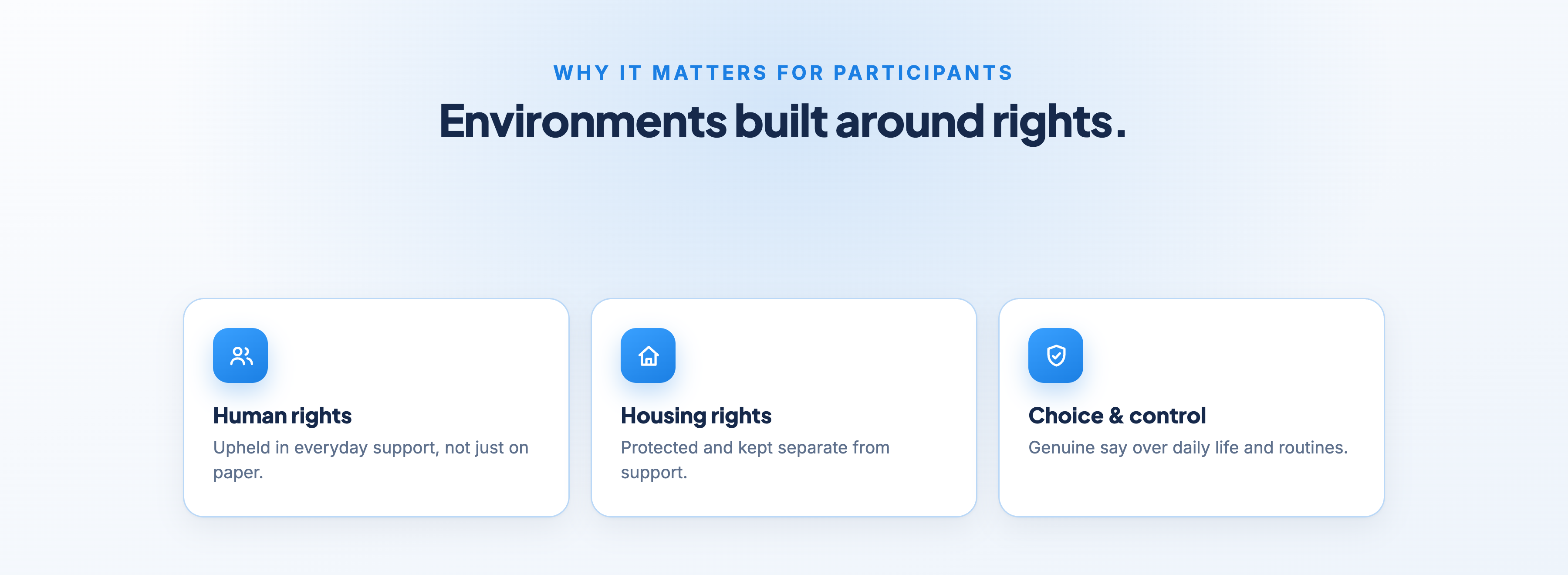
The Commission wants to see that your organisation has the capability to deliver supports that aren't just safe on paper, but foster true quality of life. These standards ensure participants live in environments where their human rights are upheld, their housing rights are protected, and they have genuine choice and control over their daily lives.
Understanding the 4 SIL Practice Standards
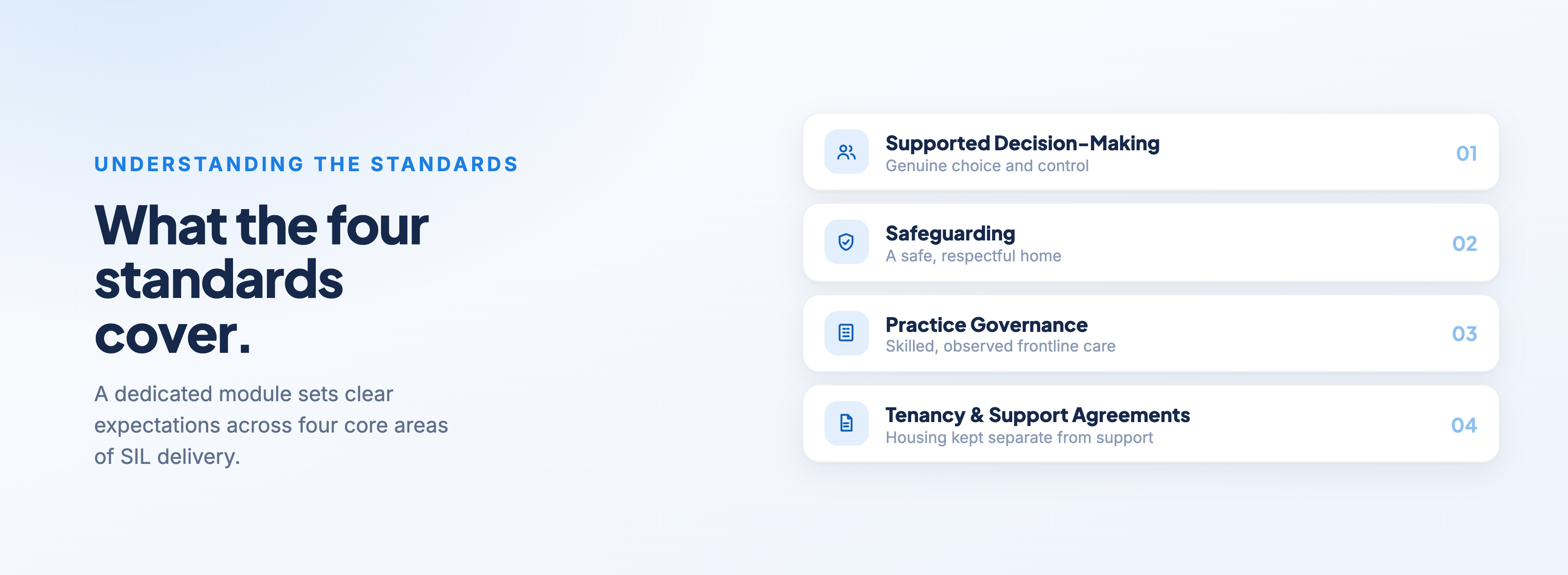
The dedicated SIL supplementary module establishes clear expectations across four core operational areas:
Standard 1: Supported Decision-Making
Focuses on supporting participants to make genuine decisions about their home, daily routines, and community access.
Moves away from substitute decision-making (making choices for someone) to active supported decision-making (giving people the time, information, and tools to choose for themselves).
Requires workers to communicate using each participant’s preferred mode and language.
Standard 2: Safeguarding
Ensures participants live in a safe, respectful home environment free from abuse, neglect, and inter-tenant harm.
Requires workers to be skilled in Positive Behaviour Support (PBS), trauma-informed care, and de-escalation strategies to manage conflict between housemates.
Balances individual safety obligations with respecting each participant’s right to the dignity of risk.
Standard 3: Practice Governance
Ensures management systems translate into skilled, competent frontline care.
Focuses heavily on Frontline Practice Leadership, requiring team leaders to observe shift delivery, coach staff, model active support, and provide direct feedback in the home.
Mandates ongoing training, mentoring, and competency evaluations rather than one-off inductions.
Standard 4: Agreements About Tenancy, Housing, and Support Arrangements
Requires a strict separation between a participant's tenancy (housing) agreement and their SIL service agreement.
Ensures participants understand that choosing to review, change, or end their SIL support provider will not automatically result in losing their housing or being evicted.
Mandates clear policies to identify and manage actual, potential, or perceived conflicts of interest when a provider delivers both housing and supports.
The Key Areas to Prepare Across Your Operations
Meeting the new Practice Standards requires aligning your documentation, governance systems, and frontline practice. Here is how you can break down your preparation step by step:
Step 1: Review and Separate Your Agreements
If your organisation provides both tenancy management and SIL support to the same participant, check that you have two legally separate agreements. Ensure these agreements are written in accessible formats and clearly outline exit processes, visitor rights, and conflict resolution mechanisms.
Step 2: Embed Frontline Practice Leadership
Audit how your house supervisors and team leaders manage their time. Upskill leaders so they can regularly observe staff practices, model active support, and assess worker competencies on shift rather than relying solely on online certificates.
Step 3: Upskill Frontline Capability
Ensure your direct support workers are trained and assessed as competent in contemporary practice frameworks. Focus your training plans on Supported Decision-Making, De-escalation, Positive Behaviour Support, Trauma-Informed Practice, Active Support, and Cultural Safety.
Step 4: Utilise the Commission's Guidance Tools
The Commission has published evidence guides for providers and reflective question packs for participants. Use these reflective questions during team briefings and internal quality reviews to evaluate your workplace culture and gather genuine participant feedback.
Compliance is an Ongoing Journey
Meeting the new SIL Practice Standards isn't a one-off project; it’s an ongoing commitment to continuous quality improvement.
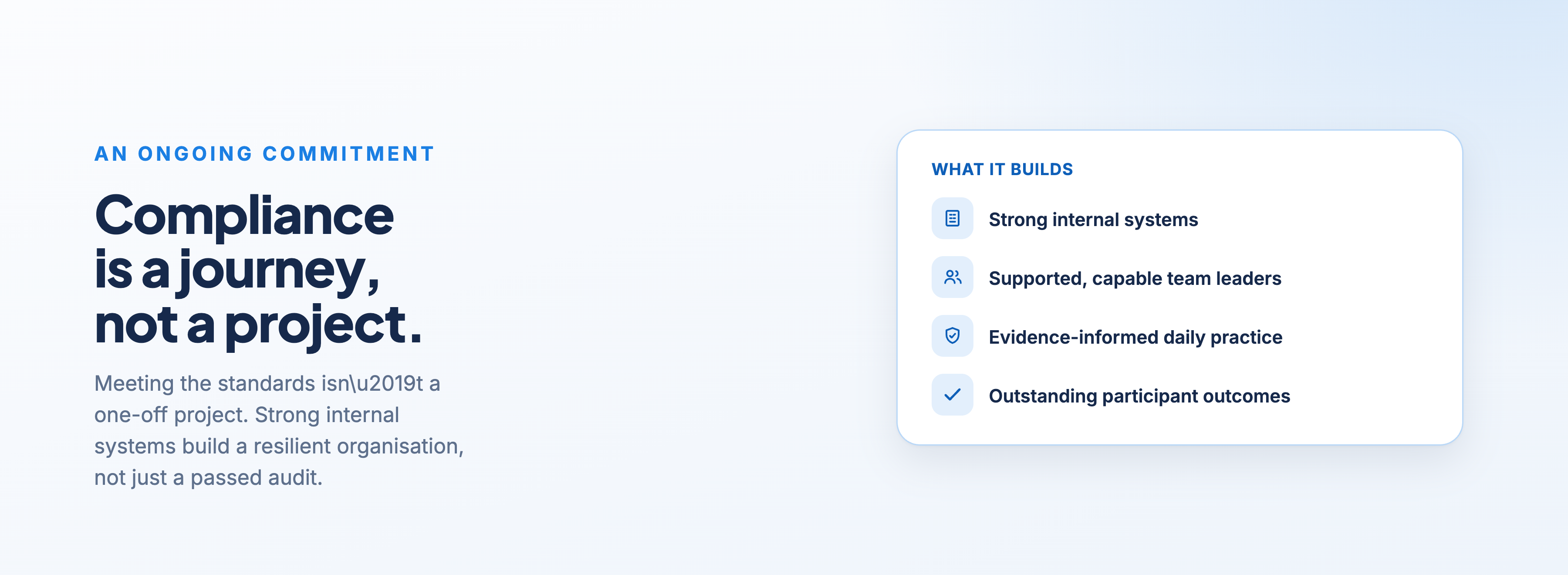
By building strong internal systems, supporting your team leaders, and embedding evidence-informed practices into day-to-day operations, you won't just pass your next audit; you'll build a resilient, sustainable organisation that delivers outstanding outcomes for participants.
How We Can Help You Succeed
You don't have to navigate these regulatory shifts alone. We’ve created practical resources to help you turn complex standards into confident daily practice:
Upskill Your Frontline Team: Check out our SIL Workforce Pass to unlock ready-to-use Train-the-Trainer kits, worker competency tools, and specialised training modules for your whole team at a flat annual rate.
Get Audit-Ready: Need structured support to review your documentation and governance? Explore our Audit Ready Program or book a consultation with Tania to build clarity, capability, and calm before your next audit.
SILosophy - Check out our SIL specific podcast, SILosophy for more resources, info and breaking news to support you across the reform.