
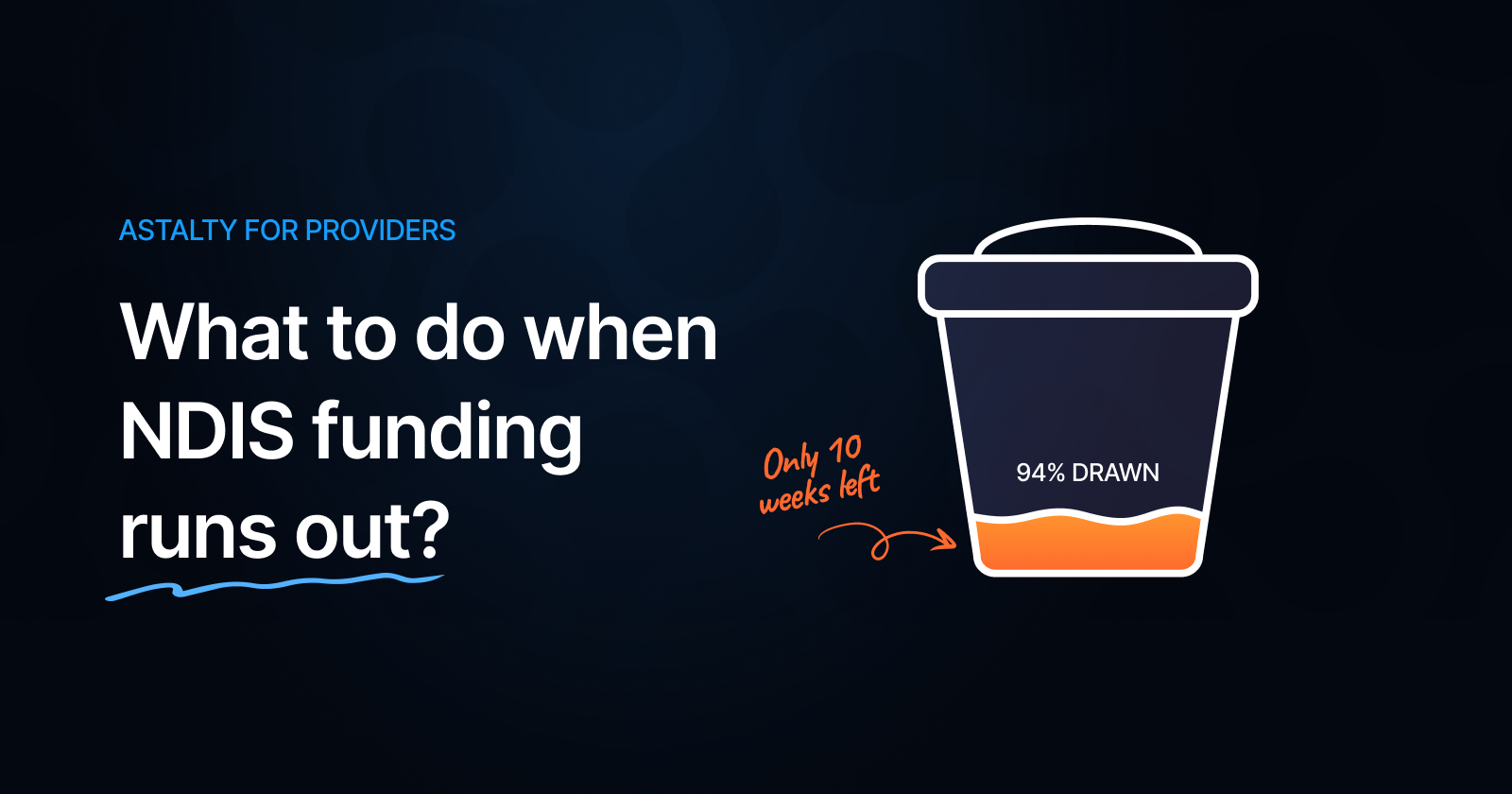
What to do when NDIS funding runs out (and how to stop wearing the loss)
There's a question I ask providers all the time.
"How are you tracking your utilisation of the funding agreed in your service agreements?"
Most of the time, the answer is the same. "That's the plan manager's job. Or the support coordinator's."
And fair enough. As a provider, you're not responsible for every dollar in a participant's plan.
You'd raise eyebrows pretty fast trying to monitor things you have no business monitoring.
But that's not what I'm asking.
I'm asking how you're tracking the funds in your service agreement. The amount you and the participant agreed you'd be drawing down over the agreed support period. If you're not on top of that, and you're trusting other people to flag the issues or reduce your exposure, you can get caught out fast.
The expectation
Here's what actually happens.
Provider delivers supports. Provider invoices the plan manager. Plan manager pays. Provider assumes the funding's there because the last invoice cleared. Repeat for another fortnight.
Then one day, an invoice gets rejected. Insufficient funding.
The provider just had an unspoken expectation that someone else was watching the funding and would notify them before this occurred.
Whilst there may be an unspoken expectation that the plan manager or the support coordinator will notify you, you're still putting your business risk in someone else's hands and hoping they'll alert you.
I hear this story too often. Sometimes it's a few hundred dollars. Sometimes it's five figures.
Providers take the hit.
Plenty of providers will tell me that tracking utilisation isn't their job. They're partly right. Tracking every dollar in a participant's plan isn't your job. Tracking what you draw down against your own service agreement is.
And yet most providers, even after losing thousands, go straight back to hoping. Hoping the plan manager will flag it. Hoping the support coordinator's on top of it. Hoping the participant will say something.
Think about the maths on that. A support coordinator with a caseload of 30 participants would need to log into, however many plan manager portals every day, check funding balances across the lot, and notify the right providers with enough lead time to actually stop or adjust supports before the funding hits zero.
Most support coordinators are already drowning in their own work. A real-time alert before the money runs out just isn't going to happen. By the time anyone tells you, it's already gone.
Hope isn't a system.
Why someone else's tracking doesn't save you
Even if your plan manager is on top of things, and most are good, what they're tracking is the participant's full plan. Not your specific service agreement.
There's a meaningful difference.
Say a participant has $30,000 in their Core support budget. You've signed a service agreement for $15,000 of that. Three other providers have agreements for the rest.
You think your $15,000 is "yours". From the plan manager's perspective, it's the participant's funding to spend. They pay invoices in the order they come in against what's available in that support category. If another provider invoices faster or for more than expected, the funds you were counting on can get drawn down too.
Sure, some plan managers might say I've “allocated” that to you, but I've seen plenty of allocated funds get drawn down by other providers.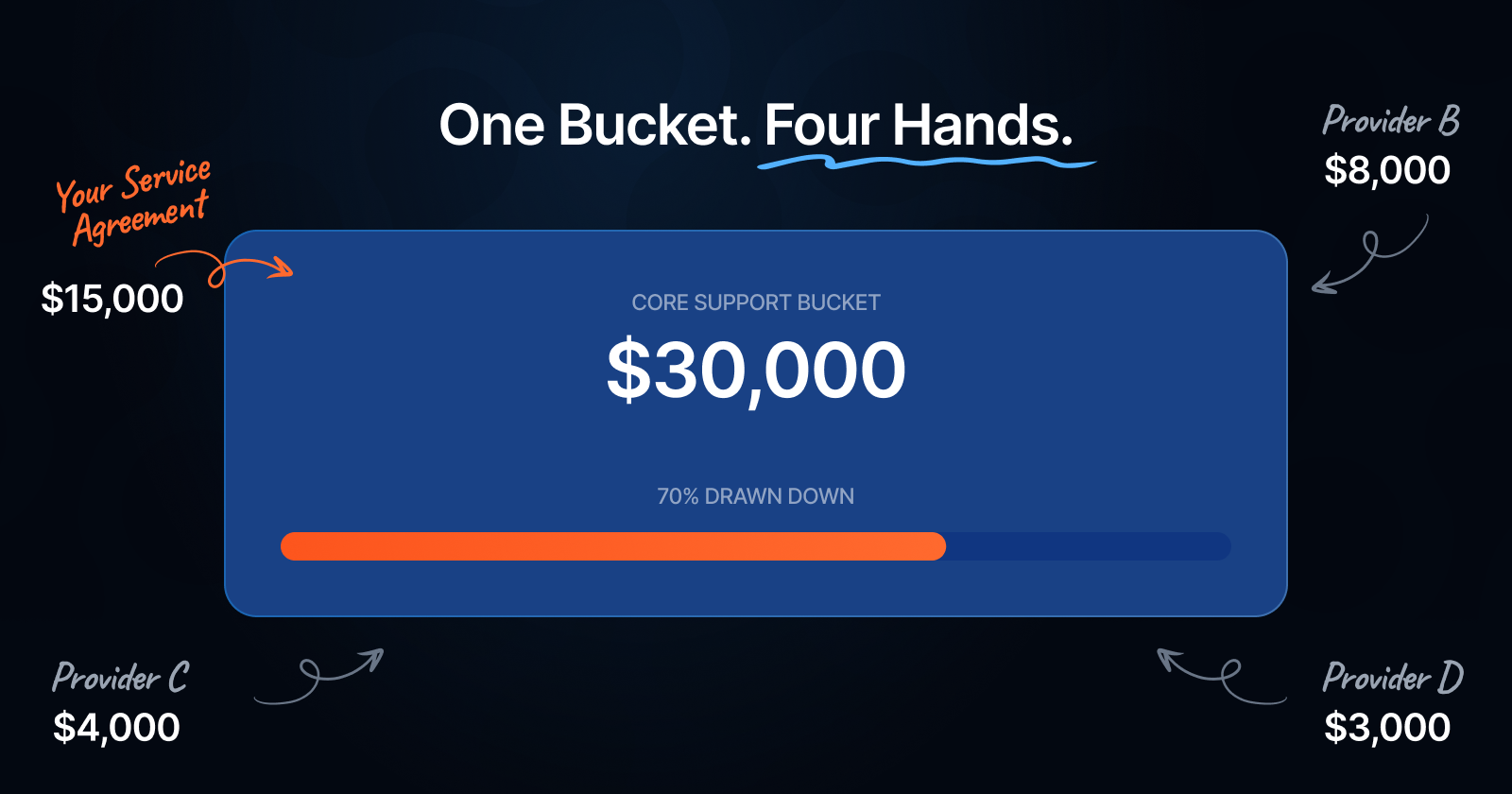
This is exactly what service bookings used to prevent. They protected your allocation. No one else could touch that pool. With service bookings phasing out, everyone's drawing from the same funding pool, and the order claims land in is what decides who gets paid.
Tracking your own utilisation doesn't stop that from happening. It just gives you visibility on it. You see the drawdown as services get invoiced. You know where you sit against your service agreement. And if you've been drawing down quicker than anticipated, you can see it in your own system, instead of chasing information from a plan manager portal or participant portal you might not even have access to.
Far from a perfect system. A lot better than flying blind.
The CRM to accounting black hole
Here's the bit that catches even providers who think they're tracking properly.
You raise a $200 invoice in your CRM. It syncs across to your accounting software.
So far so good.
Then the plan manager comes back. The line item you billed against was wrong. You'd used the $100 one when you should have used the $80. So you adjust the invoice in accounting and resend. The new value is $160.
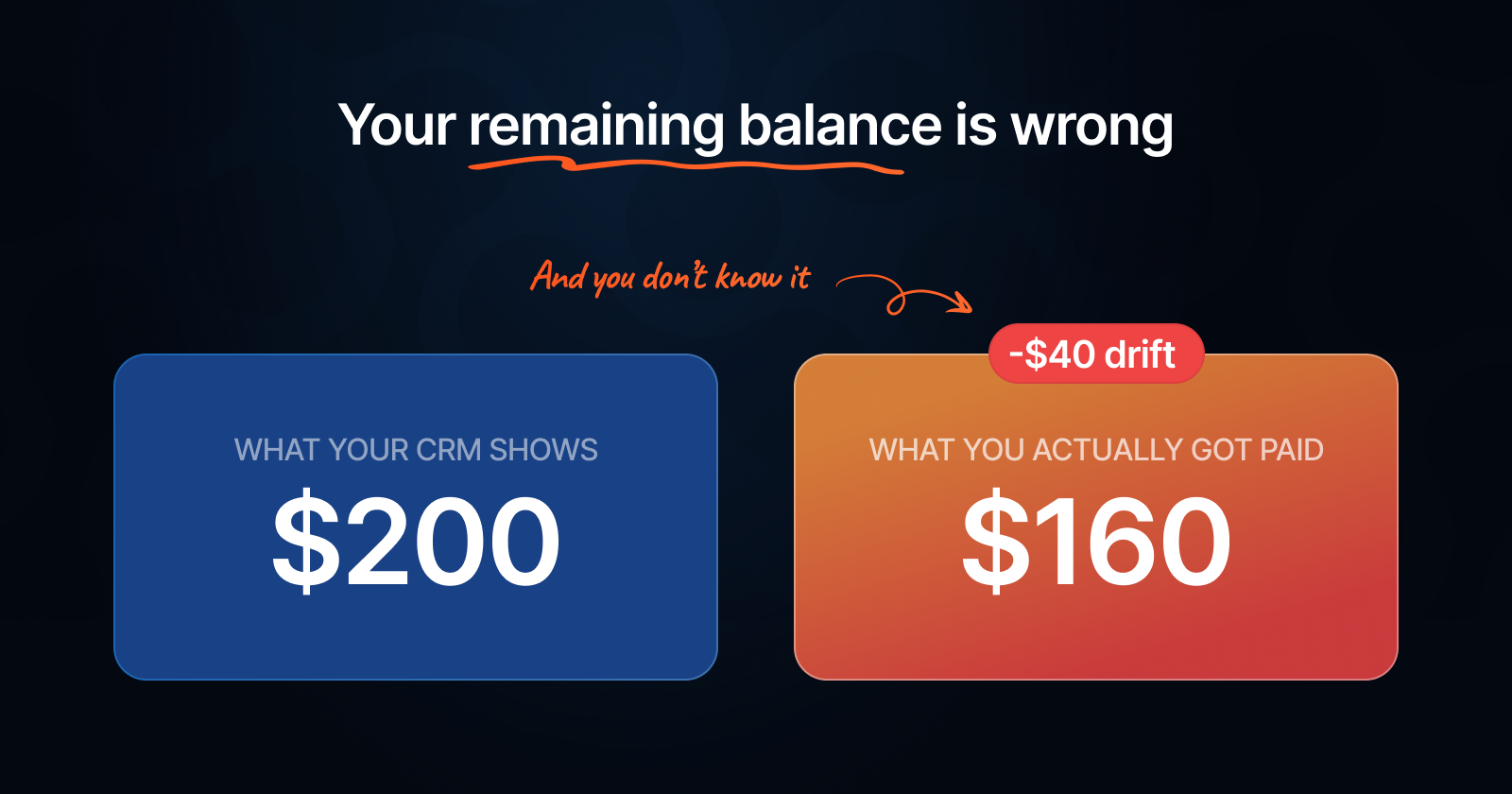
That $40 difference almost never flows back into your CRM. Your CRM still shows $200 utilised against the service agreement. Your remaining funding balance is now wrong, and you don't know it.
Multiply that by every adjustment, every credit note, every reissue across every participant for a year. The drift adds up fast.
Some CRMs let you manually update utilisation to reconcile it. Which adds yet another admin task to a list that's already overflowing. So providers skip it. Or they don't make the connection at all, not realising the CRM needs adjusting to keep the service agreement balance accurate.
Either way, providers will often land back at "that's the plan manager's job".
What you actually need to be tracking
For every active service agreement, you want eyes on:
How much funding was agreed
How much has been claimed and paid to date
How much has been delivered but not yet invoiced or paid
How much is left to draw down
Your utilisation rate against the time remaining in the support period
That last one is the early warning system.
In a perfect world, those two numbers track together. If supports are delivered roughly evenly across the support period, your utilisation rate should sit close to where you are in time. 50% through the plan? You should be around 50% utilised. 80% through? About 80% utilised.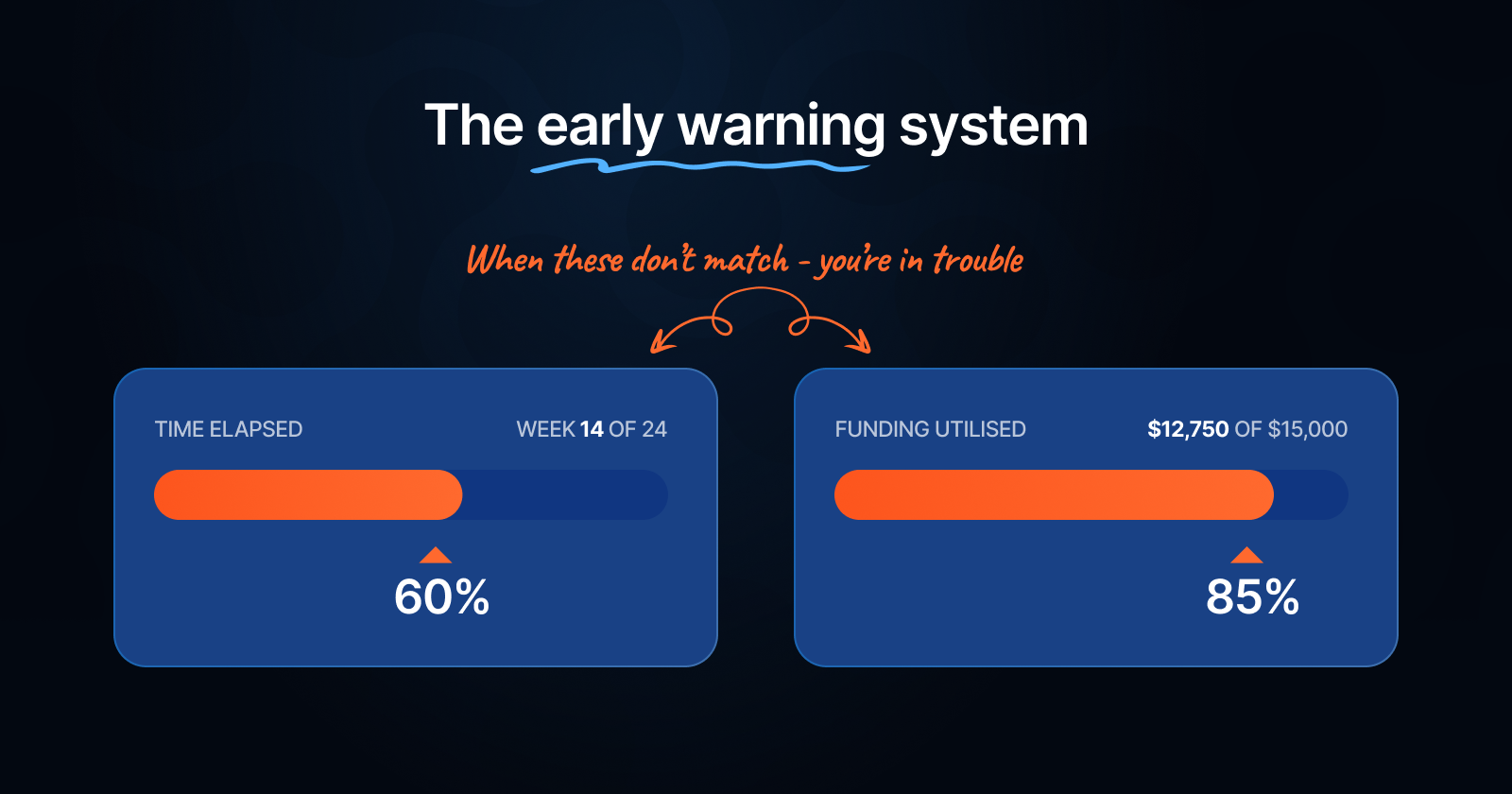
When the two numbers drift apart, that's the signal. If you're 60% through the support period but you've already utilised 85% of the agreed funding, you're going to run out before the period ends. That's a conversation to have with the participant, plan manager, and support coordinator as soon as any doubt creeps in.
Not in three weeks. Not when the rejected invoice lands.
The admin objection
The honest reason most providers don't track utilisation is admin overload.
Fair. NDIS admin is brutal. The problem is that skipping this one costs you real money.
You've already delivered the support. You've already paid the wages. If you can't claim support, the business takes a hit. The fix is to make the tracking automatic so it doesn't depend on someone remembering to do it - using software that has these workflows built in, software like Astalty.
When your CRM is the source of truth, when adjustments in accounting flow back into your utilisation, you can easily see numbers you can rely on.
Track it. Own it.
Watching your own service agreement utilisation is best practice. I'd highly recommend it to any provider who doesn't want to wear funding they can't claim.
It's not infallible. Other providers can still draw from a shared pool. But in a market where margins are thin and providers are already doing it tough, every claim you lose hurts.
Track it. Own it. Stop hoping someone else will.
