
Running a small NDIS provider business means wearing every hat at once. You're rostering support workers in the morning, writing service agreements at lunch, and reconciling invoices after the kids are in bed. Add compliance, incident reporting, and support coordination workflows on top, and admin can easily eat more hours than actual care delivery.
The right NDIS client management software changes that equation.
Instead of stitching together a rostering app, a compliance spreadsheet, and three different logins just to run your week, a purpose-built cloud platform brings invoicing, compliance tracking, and mobile access into one system.
Here's what to actually look for, and the questions small providers are asking right now.
What NDIS Compliance Software Suits Small Australian Providers Needing Simple Risk Tools?
Compliance requirements don't stay still, and the pace just picked up. From 1 July 2026, mandatory registration with the NDIS Quality and Safeguards Commission came into effect for Supported Independent Living (SIL) providers and NDIS digital platform providers. Support coordination registration was also flagged for mandatory registration, but that part of the reform has been paused for now, with broader expansion to other support types expected from 2027 onward as the Commission moves toward a graduated, risk-based registration model.
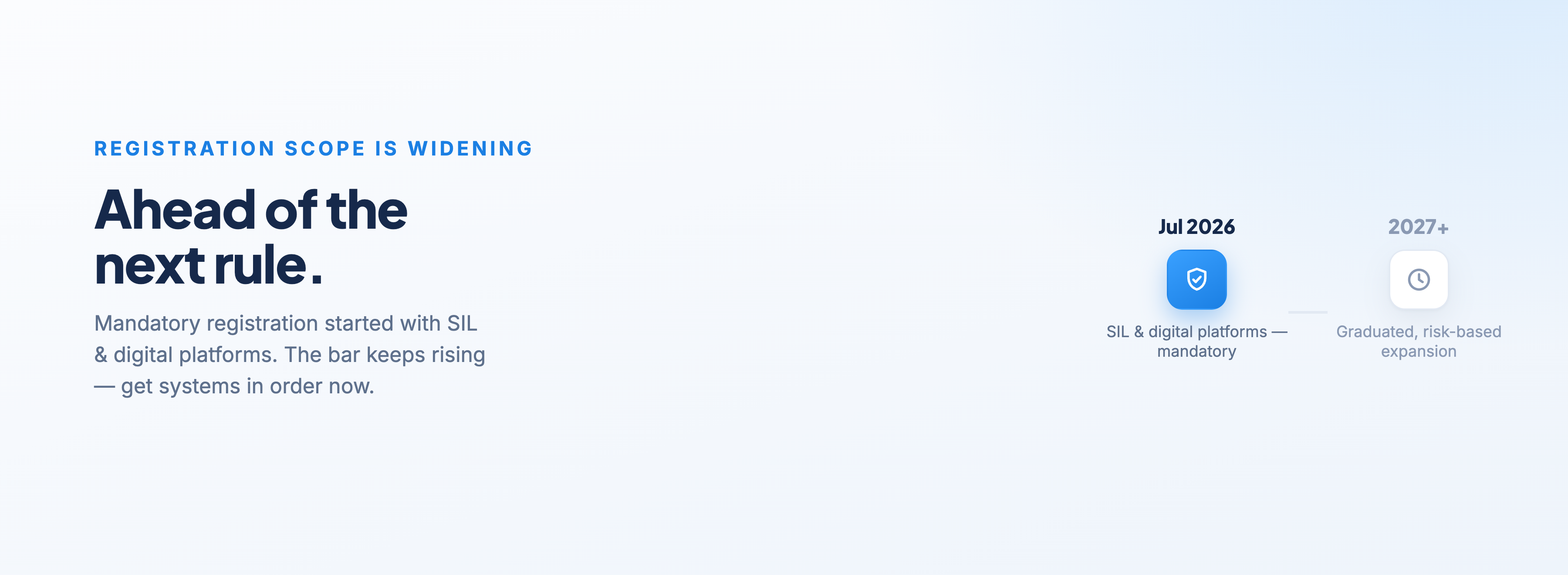
In plain terms: registration scope is widening, not narrowing. Even if the supports you deliver aren’t captured today (for mandatory registration), it's worth assuming the bar keeps rising and getting your systems in order now rather than scrambling later.
A genuine NDIS compliance tool needs to track:
Support worker documents (screening checks, qualifications, training records, expiry alerts)
Participant documents, including service agreements and consent forms
Risk assessment tools, so you can identify and document risk before it becomes an incident
Incident management, built into the platform rather than bolted on as a separate process
Tools like CTARS and Centro Assist do a genuinely good job at the policy and audit-readiness side of compliance. They're built specifically for keeping NDIS policy documents current, mapped to Practice Standards, and ready for audit day. If a strong policy library and audit prep is genuinely all you need right now, they're worth a look, and we'd say so honestly.
But that's often where a lot of compliance platforms stop. They don't touch invoicing, mobile case notes, rostering, or support coordination workflows, so you're still running a separate system for everything else. That's a real gap for a provider that's growing, because the moment you outgrow a simple compliance checklist, the cost of running multiple systems side by side shows up as admin hours, not dollars.
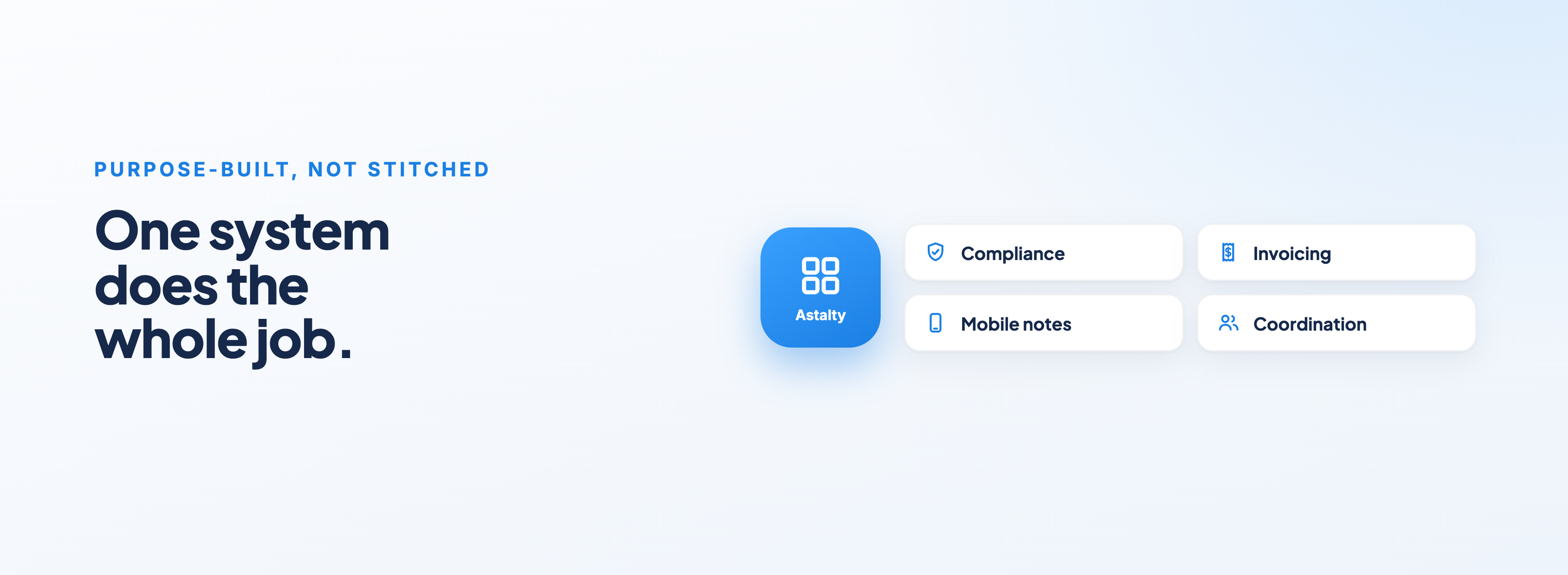
This is the gap Astalty is built to close. Worker documents, participant service agreements, risk assessments, and incident management sit in the same platform as your invoicing, mobile case notes, and support coordination workflows. You're not running a compliance tool alongside a CRM alongside a billing system. It's one place to manage risk and one place to prove it at audit time, which matters more with mandatory registration scope only set to widen from here.
How Do NDIS Client Management Systems Reduce Admin Overload?
Admin and compliance load only grows year on year in the NDIS, and it grows faster for small providers because there's no back-office team to absorb it. As a new business owner, you're doing support delivery, writing your own service agreements, running intake and referrals, and hiring, often all in the same week.
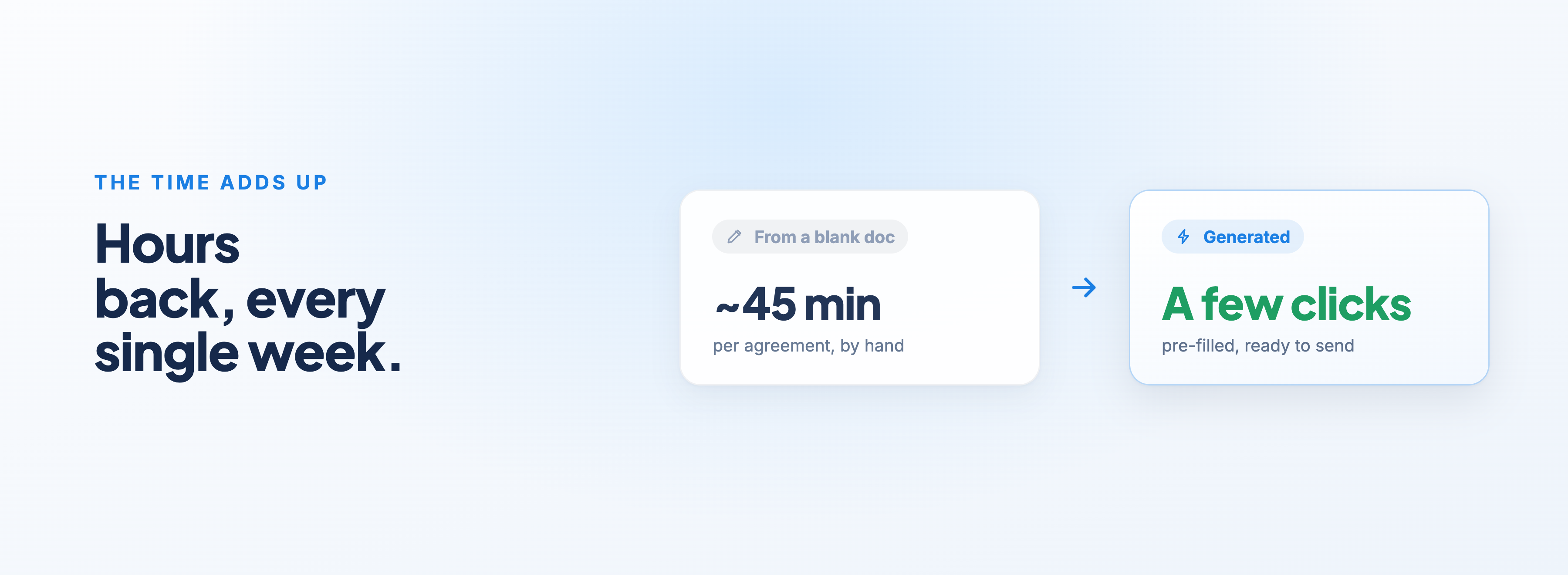
This is where the right software pays for itself fast. A few clicks to generate a service agreement instead of starting from a blank template can save hours every week. Multiply that across onboarding, scheduling, and reporting, and the time saved compounds quickly.
The providers who get ahead of admin overload aren't the ones working longer hours. They're the ones who've removed the manual steps from the parts of the business that don't need a human doing them by hand: document generation, reminders, and routine reporting.
Which NDIS Client Management Tools Streamline Billing and Claim Submissions?
Billing is one of the clearest places where the wrong software costs you money you don't see until later.
There's a newer wave of tools that have popped up specifically to solve the invoicing piece, and nothing else. EasyAs Invoicing is a mobile app built purely for generating compliant NDIS invoices, with preloaded item numbers and current pricing, aimed squarely at support workers and sole traders who just need to get an invoice out fast. Earni covers similar ground with a bit more around it, invoicing plus light scheduling, expenses, and service agreements, still scoped for sole traders and small providers rather than a full practice management platform.
Tools like these are genuinely useful if invoicing is your only pain point. But the moment you're also managing participant records, service agreements, compliance documentation, and a growing team, a standalone invoicing app means you're now running that alongside a separate system for everything else, which brings back the same double-handling problem in a different shape.
Astalty takes a different approach: invoicing and claims live in the same system as your participant records, service agreements, and compliance data, so you're not re-entering the same information twice.
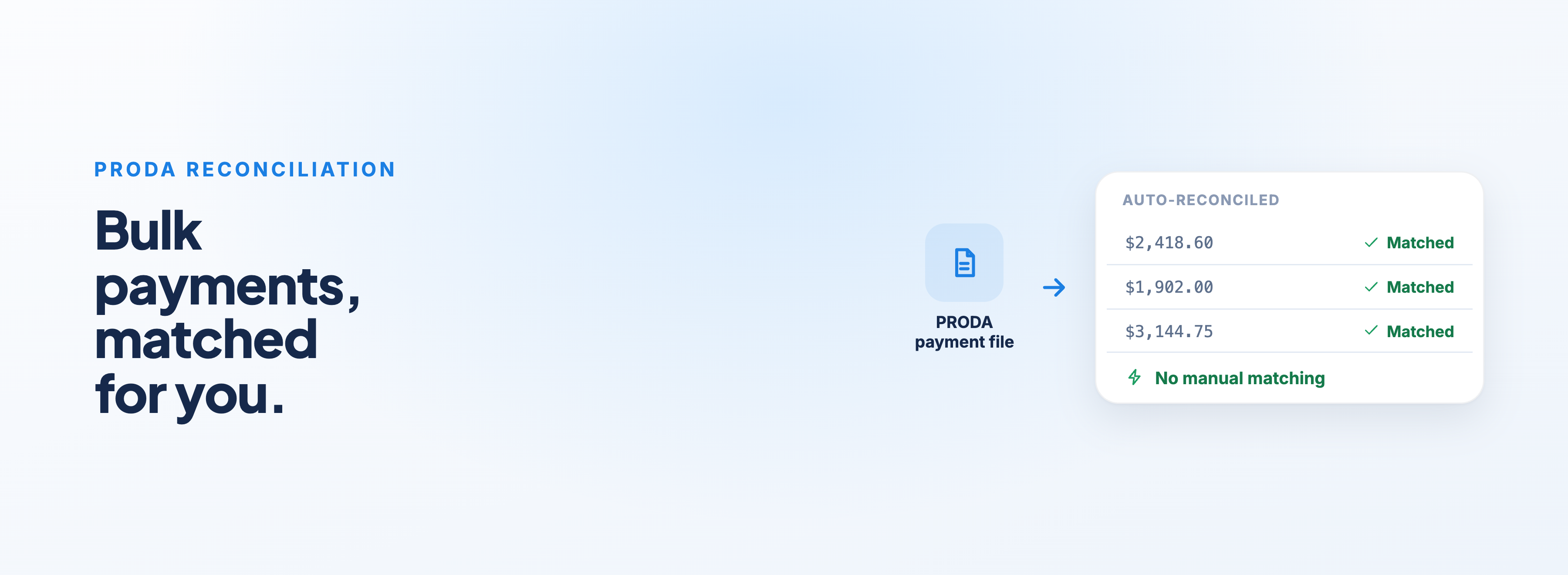
For registered providers, Astalty also supports automatic reconciliation of bulk payment files from PRODA, which removes one of the more tedious manual matching tasks in the billing cycle.
As you scale, integration with your accounting software matters more than it seems at first. Astalty connects directly with Xero. If you're using a tool that's cheap up front but doesn't integrate properly with your accounting platform, you end up reconciling twice: once in your accounting software, once in your NDIS platform.
That's not a small inconvenience. It's a recurring admin cost that grows with every transaction, and it's the kind of thing that looks fine on a pricing page and turns into hours of double-handling every month.
What's the Best NDIS Software for Mobile Access?
There's no single answer to "best," because it depends on what your team actually needs in the field. But there are a few non-negotiables worth checking for, and they're the things Astalty was built around for support workers on shift:
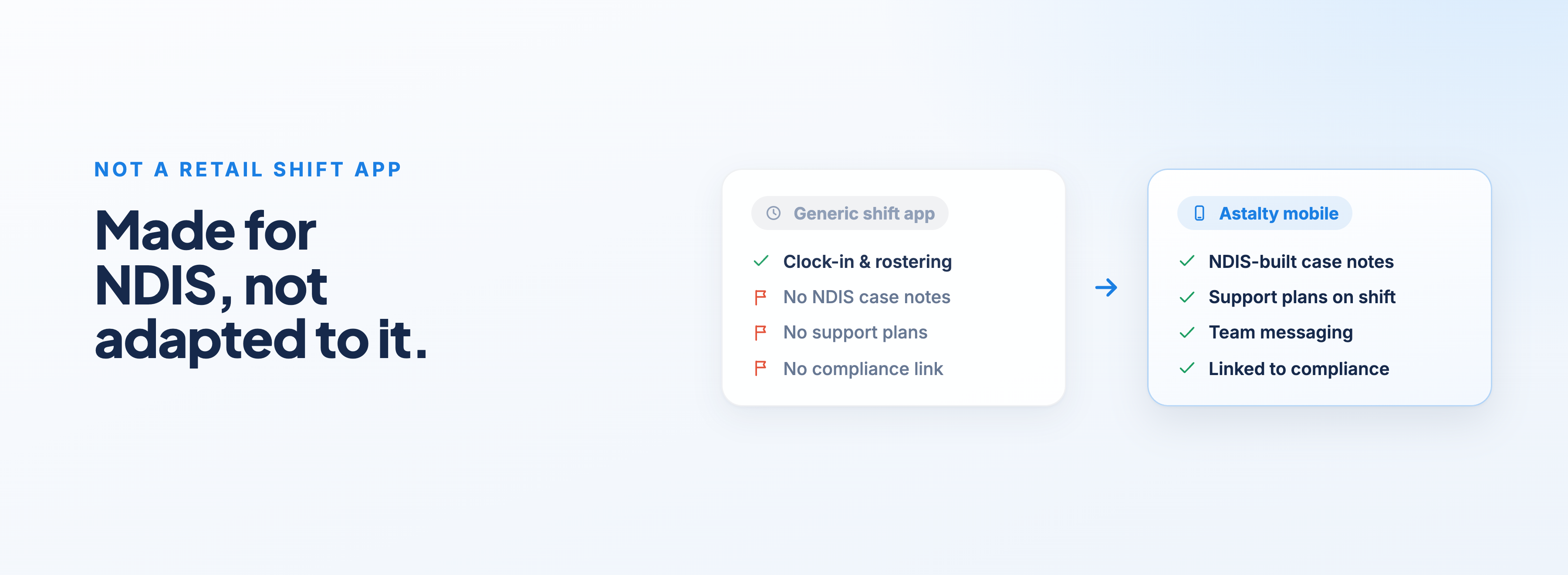
Case notes that save automatically, so nothing gets lost if a worker loses signal mid-shift
Direct team messaging, so support workers can communicate without switching to a separate app
Support plans stored in the platform, so workers have the information they need at their fingertips during a shift, not after it
It's tempting to go with something cheap and general-purpose, like a rostering tool built for retail or hospitality shifts. Tools like Deputy are fine at face value for basic clock-in and rostering, but they weren't built for NDIS case notes, support plans, or compliance-linked documentation.
You end up paying for that gap somewhere else, either in extra admin work stitching systems together, or in running multiple subscriptions to cover what one purpose-built platform handles on its own.
How Do Cloud NDIS Platforms Improve Small Provider Efficiency?
Pull all of the above together and the pattern is the same: efficiency for a small provider comes from reducing the number of systems, logins, and manual reconciliation steps your team has to deal with every week.
A cloud NDIS platform that combines compliance tracking, invoicing and billing, support coordination workflows, and mobile case management into one system means:
Less time spent re-entering the same data across multiple tools
Fewer compliance gaps, because worker and participant documentation lives in one place
Faster billing cycles, with fewer manual reconciliation steps
Support workers who have what they need in the field, without chasing information back to the office
This is the gap Astalty was built to close. We're a cloud NDIS platform built specifically for small Australian providers, bringing invoicing, compliance tools, mobile access, and support coordination workflows into one purpose-built system, instead of asking you to manage three or four separate tools to get the same outcome.
See It for Yourself
If you're currently juggling a compliance spreadsheet, a separate billing tool, and a rostering app that wasn't built for the NDIS, it might be time for a simpler setup. Book a demo with Astalty to see how a purpose-built platform handles compliance, billing, and support coordination in one place.
